
Healthy soil versus average production soil
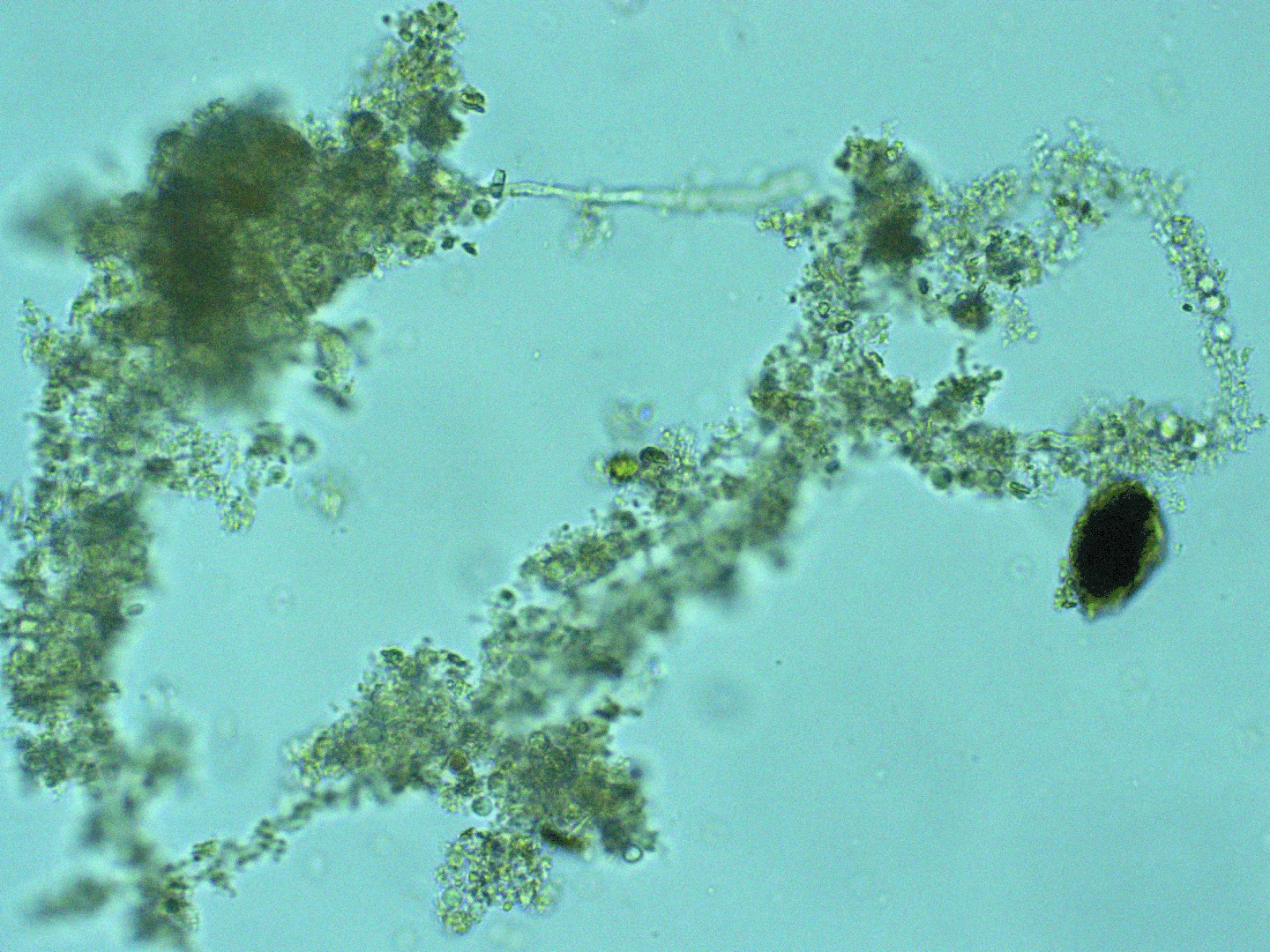
Healthy soils have 800 to 1,000+ microbe species and a population of 1 to 10 billion per gram. Average production soils have 5 to 10% of that diversity and only one-hundredth to one-millionth of the population.
Impacts of low soil microbe diversity
- Increased pest and disease incidence
- Decreased water and nutrient efficiency
- Reduced plant nutrient status and vigor
- Reduced plant stress tolerance to heat, cold, drought and salt
How broad-spectrum inoculants help
When so many microbes are missing, many soil and plant functions are missing in action. A broad-spectrum inoculant is designed to repopulate the entire soil microbiome.
- Redundancy in every nicheFilling the functional niches with many species for each beneficial function provides alternatives to assure performance no matter the combination of soil and plant conditions, nutrient antagonisms and pathogen pressure.
- Multi-step processesMany plant physiological activities require multiple sequential reactions, which frequently require different microbes to perform different parts of the process. Broad-spectrum inoculants increase the likelihood of having those microbes available.
- Early and late colonizersSome species are good early colonizers. Others, like mycorrhizae, don’t colonize well until there’s a fairly complete supporting biology.
- Tolerant species firstSome soil conditions allow only tolerant species to colonize first — for example, microbes tolerant to salt, high or low pH, or toxicity.
- Plant selectivityPlants can be selective for some species. Some microbial species may not proliferate until there’s a crop rotation to a plant that will favor that microbe.
What SGS means by broad spectrum
Maximum biological diversity is our focus. We have sourced microbes from virgin habitats all over the world — from arctic tundra, tropical rainforest, tidal flats, virgin prairies, desert oases and other habitats. We have nurtured these cultures for years and grow the inoculants in five distinct phases. We feed them diverse food sources to build a large and diverse community of self-reinforcing beneficial microbes.
For example, MetaGrow ST and MetaGrow 5X+ have 6 species of free-living nitrogen fixers (which pull nitrogen from the air) and over a dozen species of nitrogen cyclers (which change the form of nitrogen). And there are at least 6 species of phosphorus solubilizers. All of these are in populations of at least 1 × 10⁷ cfu/mL.
How to compare the value of microbial inoculants
Since broad-spectrum diversity is so important to restore soil health and plant resiliency, microbial inoculants should be evaluated for their population size and functional diversity. Many microbe products provide a relative handful of species, without overlapping functionality.
Compare total population
Compare the total population size of competing products.
Calculate the cost per billion microbes
To compare the value of microbe products, you want to know the cost per microbe. Calculate the cost per billion microbes for each product.
Price the functions you need
In some cases, when addressing a specific production problem, it helps to know the cost of microbes that can perform certain desired functions.
Application strategy
To restore soil functionality, apply broad-spectrum microbes and microbe food in repeated small applications.
- More, smaller applications provide better colonization.
- Apply to the soil plant root zone by the most practical method, and also foliar.
- If soil is bacterial dominant, apply MetaGrow F, our diverse fungal-dominant inoculant.
- Apply microbes to all crops in the rotation, not just the money crop.
- Feed microbes with each application (MetaGrow MFOOD and Pacific Gro fish hydrolysate).
Key takeaways
- Healthy soils have 800 to 1,000+ microbe species; average production soils have only 5 to 10% of that diversity.
- Low diversity shows up as more pest and disease, lower water and nutrient efficiency, weaker vigor and lower stress tolerance.
- Broad-spectrum inoculants fill each functional niche with several species, so performance doesn’t depend on a single organism.
- Compare inoculants by population size, functional diversity and cost per billion microbes.
- Restore soil with repeated small applications of microbes plus microbe food — to the soil and foliage, and across every crop in the rotation.

Valuing the Diversity of Microbe Inoculants
This page is adapted from the SGS PDF “Valuing the Diversity of Microbe Inoculants” (© 2023), which remains the technical reference. The 2-page original is available to download, print and share.
Download the Original PDF (PDF, opens in a new tab)